
Comprender el análisis de la textura del pintalabios
Pintalabios es un producto cosmético complejo cuya calidad y atractivo para el consumidor dependen en gran medida de su textura, firmeza y comportamiento durante la aplicación. La textura influye en la suavidad con la que se desliza la barra de labios sobre los labios, en su duración y en la sensación de comodidad que proporciona. Los fabricantes deben evaluar minuciosamente estas propiedades para mantener la uniformidad entre lotes y garantizar la satisfacción del consumidor. El análisis de la textura proporciona datos objetivos para respaldar las mejoras en la formulación y las medidas de control de calidad.
¿Qué es un analizador de textura cosmética?
A analizador de textura cosmética es un instrumento avanzado diseñado para medir las propiedades físicas de los productos de belleza, entre las que se incluyen pintalabios, cremas, geles y bálsamos. En cuanto al pintalabios, evalúa rigidez, resistencia y deformación bajo fuerzas controladas. Mediante métodos estandarizados de análisis de textura, los fabricantes de cosméticos pueden cuantificar las diferencias sutiles entre las formulaciones e identificar posibles mejoras en el tacto, la estabilidad y la facilidad de uso de los productos.
Análisis de la textura del pintalabios: medición de la firmeza y ensayo de compresión
Medición de la firmeza
Firmeza es un parámetro fundamental que indica cuánta fuerza se necesita para deformar una barra de labios. Una firmeza elevada garantiza que el producto mantenga su forma durante el envasado, el transporte y la aplicación, mientras que una textura demasiado blanda puede provocar roturas o una aplicación deficiente. La firmeza se mide normalmente mediante un sonda de penetración o compresión en un analizador de textura.
Ensayo de compresión
El ensayo de compresión simula las fuerzas a las que se ve sometido un pintalabios durante su uso habitual. Mediante la aplicación de una fuerza descendente controlada, el analizador de textura mide resistencia, deformación y recuperación del producto. Esta prueba garantiza que la barra de labios se mantenga estructuralmente sólido, no falla en condiciones normales de uso y ofrece una experiencia de uso constante.
Observaciones clave:
- La fuerza máxima de compresión está relacionada con la rigidez del producto.
- El tiempo que tarda en recuperarse tras la compresión refleja su elasticidad y suavidad.
- Las diferencias en el comportamiento de compresión pueden servir de guía para ajustar el contenido de cera o aceite.
Factores que influyen en la textura del pintalabios
Hay varios factores que influyen en el rendimiento del pintalabios:
- Contenido en cera: Aporta estructura y determina la firmeza.
- Tipo y cantidad de aceite: Influye en la facilidad de peinado, la suavidad y el brillo.
- Concentración de pigmento: Una mayor concentración de pigmento puede aumentar la resistencia.
- Sensibilidad a la temperatura: La barra de labios debe mantener su firmeza a temperatura ambiente, pero seguir siendo lo suficientemente blanda como para aplicarse con suavidad.
El análisis de la textura permite a los fabricantes cuantificar estos efectos y ajustar las fórmulas para lograr un equilibrio óptimo.
Equipo recomendado: Cell Instruments TEX-01
El Analizador de texturas Cell Instruments TEX-01 Este medidor es ideal para evaluar la textura de los pintalabios. Entre sus características principales se incluyen:
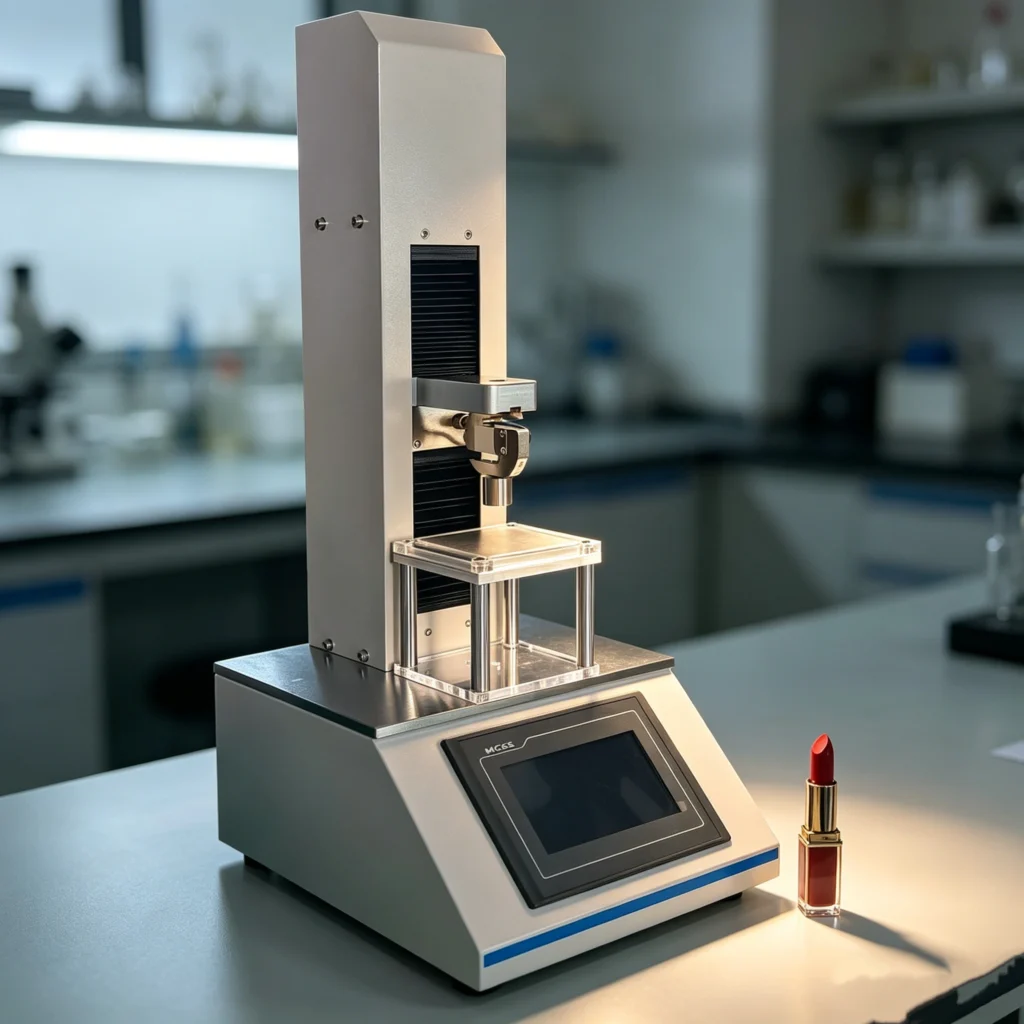
- Sondas múltiples aptas para medición de la compresión, la penetración y la firmeza.
- Detección de fuerza de alta resolución para captar las sutiles variaciones en la textura del pintalabios.
- Software fácil de usar para la recopilación, el análisis y la presentación de datos.
- Compatible con ambos aplicaciones de control de calidad e I+D, garantizando un rendimiento constante del producto.
Con TEX-01, los fabricantes pueden comparar de forma sistemática las formulaciones, optimizar los parámetros de textura y mantener altos estándares de satisfacción del cliente.
Usos más allá del pintalabios
Los analizadores de textura de productos cosméticos son herramientas versátiles que se utilizan en los siguientes ensayos:
- Bálsamos y brillos labiales
- Cremas y lociones
- Productos a base de gel
- Perfumes sólidos y bálsamos
Esta versatilidad hace que un analizador de textura cosmética una herramienta indispensable para el desarrollo de productos y el control de calidad.
Conclusión
En conclusión, Análisis de la textura del pintalabios es fundamental para garantizar la calidad del producto y la satisfacción del consumidor. La medición de la firmeza, la elasticidad y la resistencia a la rotura permite a los fabricantes perfeccionar las fórmulas y mantener unos estándares uniformes. El uso de herramientas avanzadas como la analizador de textura cosmética y sondas específicas proporciona información detallada y reproducible tanto para la investigación como para el control de calidad en la producción. La incorporación de instrumentos como el Cell Instruments TEX-01 garantiza que los pintalabios cumplan los criterios de rendimiento deseados, desde la facilidad de aplicación hasta la resistencia del envase.
Preguntas frecuentes
P1: ¿Por qué es importante la firmeza en una barra de labios?
La firmeza garantiza una aplicación suave y evita que el producto se rompa, lo que repercute directamente en la experiencia del consumidor.
Pregunta 2: ¿Cómo influye la elasticidad en el rendimiento del pintalabios?
La elasticidad determina la capacidad de recuperación del pintalabios tras la compresión, lo que influye en la retención de la forma, la sensación al aplicarlo y la estabilidad ante los cambios de temperatura.
Pregunta 3: ¿Qué función desempeña un analizador de texturas cosméticas?
Proporciona mediciones cuantitativas de la firmeza y la elasticidad, lo que facilita el desarrollo de fórmulas y el control de calidad.